
FBR Tax Return Deadline Myths: FBR ATL Surcharge
FBR Tax Return Deadline Myths: Is June 30th the Last Date to File?
Worried about the Rs. 25,000 FBR ATL surcharge or automatic bank deductions on June 30th? Read the factual breakdown of the Finance Act 2026 tax updates here.
The Truth About the Rs. 25,000 FBR ATL Surcharge & June 30 Deadline Myths: If you have been scrolling through WhatsApp or Facebook lately, you have probably seen alarming warnings targeted at Pakistani taxpayers. Viral posts claim that if you don’t file your income tax returns by June 30th, the Federal Board of Revenue (FBR) will automatically drain your bank account, or hit you with a massive Rs. 25,000 penalty.
Before you panic-file your taxes through an unverified agent, let’s clear the air with actual legal facts.
Myth 1: Is June 30th the Deadline to File Income Tax Returns?
The Reality: No. June 30th marks the official closing of the Fiscal Year in Pakistan—it is not the last date to file your taxes. The FBR actually opens its portal for the new Tax Year after June 30th (starting July 1st). Legally, you have until September 30th to file your annual income tax returns. While FBR historically extends this deadline into October for administrative reasons, your target should always be September 30th, not June 30th.
Myth 2: Does Every New Filer Have to Pay a Rs. 25,000 ATL Surcharge?
The Reality: Absolutely not. This rumor stems from a misinterpretation of the Finance Act 2026. The law did increase the Active Taxpayers List (ATL) surcharge for individuals from Rs. 1,000 to Rs. 25,000. However, this ATL surcharge only applies to late filers.
- If you file your tax returns on time (between July 1st and September 30th), your ATL surcharge is Rs. 0.
- The Rs. 25,000 fee is only triggered if you miss the standard deadline, become an “inactive taxpayer,” and want to pay a fee to get back onto the Active Taxpayers List later. New filers filing within the due date pay nothing extra.
Myth 3: Will FBR Automatically Freeze or Deduct Money from Bank Accounts on June 30?
The Reality: This is a complete hoax. The FBR cannot arbitrarily dip into your bank account without due process. Legal asset recovery requires formal audits, statutory notices, and specific legal assessment orders. No automatic mass deductions are taking place on June 30th.
Why You Should Avoid “Panic-Filing”
Many predatory, untrained agents are spreading these half-truths to exploit public anxiety and rush people into paying hefty filing fees. Rushing your tax return often leads to critical errors, unreported assets, and misstated income—which will cause genuine FBR legal notices down the road.
What should you do instead? Wait for the current fiscal year to close on June 30th. Collect your bank statements, salary certificates, and utility tax receipts starting July 1st. Work with a registered, professional tax consultant to file your returns accurately and calmly well before the true September deadline.
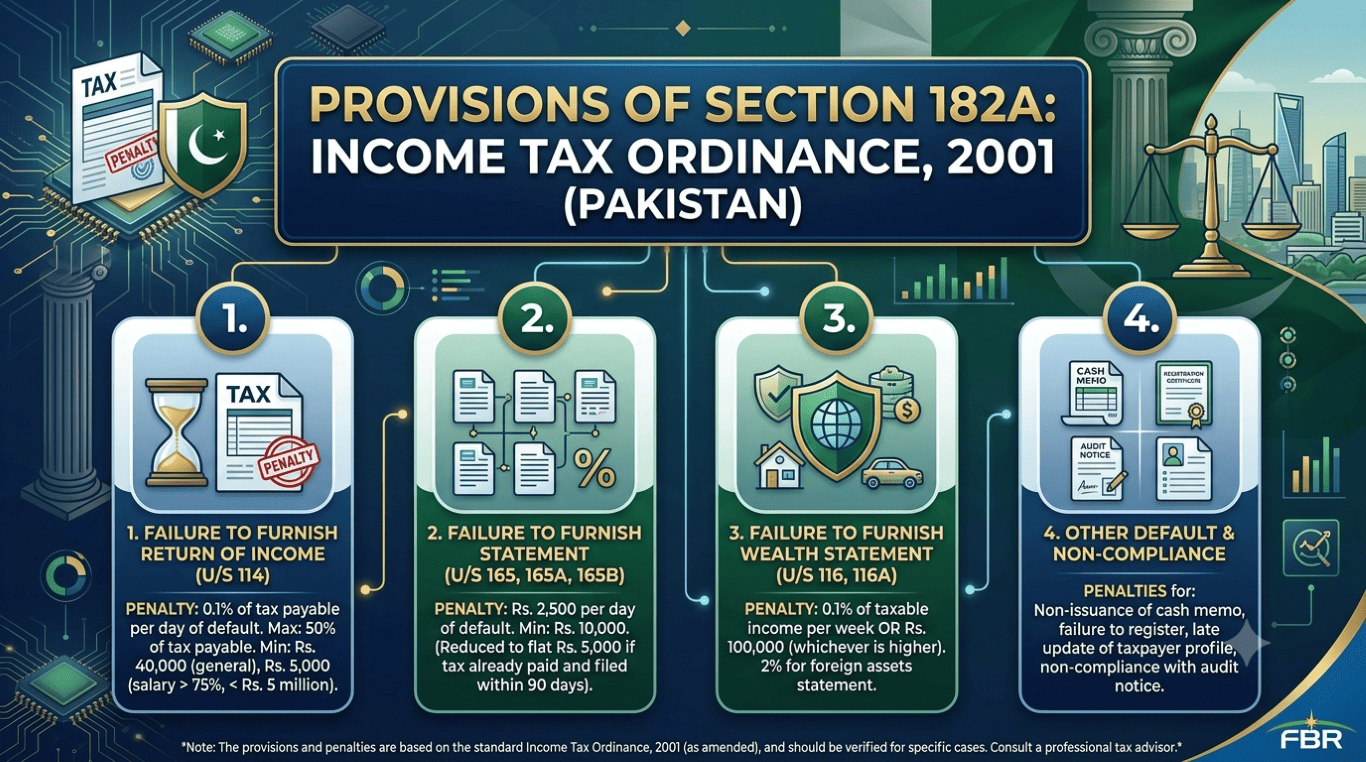
Part 3: Recreation of Section 182A ATL Surcharge (Income Tax Ordinance, 2001)
Recreated in formal legislative English drafting style reflecting the statutory realities of the Finance Act 2026 updates.
INCOME TAX ORDINANCE, 2001
You might be getting misled! June 30th, Rs. 25,000, Active Taxpayers List (ATL) Surcharge, and misinformation spreading on social media—what is the actual reality?
Over the past few days, identical messages have been spreading like wildfire across social media. Some claim, “File your tax return before June 30th, otherwise FBR will withdraw money directly from your account.” Others assert, “Anyone filing their return for the first time after June 30th must mandatory pay Rs. 25,000.” Certain posts even say, “June 30th is the final deadline to file income tax returns.” These messages have caused panic among thousands of people, but when you look at the law and the facts, the picture is entirely different.
June 30 is the year and not last date of tax return filing
First, it is crucial to understand that June 30th is not the last date to file income tax returns; rather, it is the closing date of the financial year. Every year, after the financial year ends, the FBR begins receiving returns for the new tax year. According to the law, the designated period to file returns is generally from July 1st to September 30th. Over the past several years, the FBR has frequently extended this date due to various administrative reasons, pushing the final deadline into October multiple times. Therefore, terrifying people by declaring June 30th as the final deadline is completely incorrect.
The core of the matter stems from an important change made in the Finance Act 2026 regarding the Active Taxpayers List (ATL) surcharge. Previously, this surcharge was Rs. 1,000, which has now been increased to Rs. 25,000. Unfortunately, this single change is being stripped of its context and presented in a way that suggests everyone, or every new filer, must pay Rs. 25,000 after June 30th. However, the law says no such thing.
What exactly is the Active Taxpayers List (ATL) surcharge?
The question is: what exactly is the Active Taxpayers List (ATL) surcharge? The Active Taxpayers List is essentially an FBR database containing individuals and businesses who file their income tax returns on time. People on this list enjoy lower withholding tax rates and various other legal benefits, while those outside the list have to pay taxes at much higher rates.
ATL surcharge is an additional fee
The ATL surcharge is an additional fee collected under specific circumstances from a person who falls out of this list because they failed to file their return on time, and later applies to be re-included. Under the Finance Act 2026, this specific surcharge has been hiked from Rs. 1,000 to Rs. 25,000. This absolutely does not mean that every new filer or anyone submitting their return for the first time after June 30th will automatically have to pay Rs. 25,000.
Similarly, the claim that FBR will automatically pull money out of people’s bank accounts on June 30th is false. All powers of the FBR are subject to the law, and formal legal procedures, statutory notices, and strict prerequisites exist before any recovery action can be taken. Assuming that automatic deductions will begin on June 30th based entirely on viral social media posts is completely divorced from reality.
Fear-mongering Tax Consultants
Regrettably, some individuals are fear-mongering among the public just to make a quick buck. By sharing half-baked or flat-out incorrect information, they create an impression that failing to file a return today will lead to catastrophic financial loss. Profiting off this wave of anxiety, returns are being filed in a frenzy. However, the duty of a responsible tax consultant or professional expert is to accurately interpret the law, not to turn public panic into a business model.
This does not mean you shouldn’t file your return. If you are legally required to file an income tax return, you must absolutely do so within the due time. Filing on time ensures you remain on the Active Taxpayers List, enjoy lower withholding tax rates, and stay protected from unnecessary surcharges or future legal complications.
Section 182A: Return Not Filed Within Due Date
Non-inclusion in the Active Taxpayers List
Where a person fails to file a return of income under section 114 within the due date specified in section 118, or within the time extended by the Commissioner or the Board under section 119 or section 214A respectively, the name of such person shall not be included in the Active Taxpayers List (ATL) issued by the Board for the tax year to which the failure relates.
Conditional Inclusion upon Payment of Surcharge
The name of a person referred to in sub-section (1) shall only be included in the Active Taxpayers List after the return has been furnished, subject to the condition that such person pays a prescribed Active Taxpayers List Surcharge to the FBR, at the following rates:
| Serial | Taxpayer Classification | Statutory Surcharge Amount |
| 1. | Company | As prescribed under the law / Rs. 100,000 |
| 2. | Association of Persons (AOP) | As prescribed under the law / Rs. 50,000 |
| 3. | Individual (Salaried & Business) | Rs. 25,000 (As amended by Finance Act) |
Restriction on Tax Refunds and Compensations
Notwithstanding anything contained in this Ordinance, where a person’s name is not included in the Active Taxpayers List due to the default mentioned in sub-section (1):
- (a) No refund under section 170 shall be issued or processed for the duration that the person remains inactive; and
- (b) No additional fee or compensation for delayed refund under section 171 shall accrue or be payable to the person for the period of delay attributable to the non-payment of the surcharge specified under sub-section (2).
